
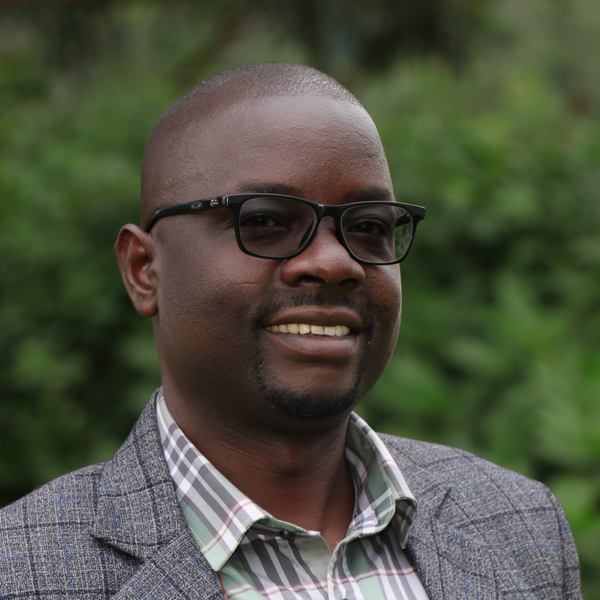
Paul Tiboti
- Faculty of Engineering, Technology, Applied Design and Fine Art
- Department of Civil Engineering
- ptiboti@kab.ac.ug
- +256782308876 | 0701276799
- PhD Candidate, MSc Civil Eng. (MAK), BSc Civil Eng. (NDU), Dip. Water Eng. (UTC-Elgon).

Tiboti Paul is a civil/structural engineer, researcher, and PhD candidate with over 12 years of professional experience in infrastructure development, structural engineering, watershed management, construction supervision, and higher education. He holds a Master of Science in Civil Engineering (Structural Engineering) from Makerere University, a bachelor’s degree in civil engineering from Ndejje University, and a diploma in water engineering from Uganda Technical College–Elgon.
He has served in technical and leadership roles, including Project Engineer at ACORD Uganda, Assistant Estates Officer at Ndejje University, and Civil/Structural Engineering Task Force Committee Member with the Uganda Protestant Medical Bureau (UPMB). His expertise encompasses structural design and analysis, project management, quality assurance, catchment restoration, water resources management, and sustainable construction practices.
In addition to professional practice, Tiboti is an experienced academic with a teaching career of over 12 years. He is also an active researcher with several peer-reviewed publications in structural and material science.
Qualifications
PhD Candidate, Civil Engineering – Kabale University (KAB) (Ongoing)
MSc Civil Engineering (Structural Engineering) – Makerere University (MAK)
BSc Civil Engineering – Ndejje University (NDU)
Dip. Water Engineering – Uganda Technical College, Elgon (UTC-Elgon)
Research Interests
Structural Engineering; Geopolymer Cement; Alternative Cementitious Materials; Waste Valorization; Durability and Mechanical Performance of Materials; Soil Stabilization; Climate-Resilient Infrastructure; Finite Element Analysis; and Environmental Sustainability
Publications
Projects
Supervision
Presentations
The Best Paper Presenter at the Second International Conference on Research Collaboration of Environmental Science 2021 in Japan, April 25th, 2021.
IOP Conference Series: Earth and Environmental Science, 802(1). https://doi.org/10.1088/1755-1315/802/1/012056